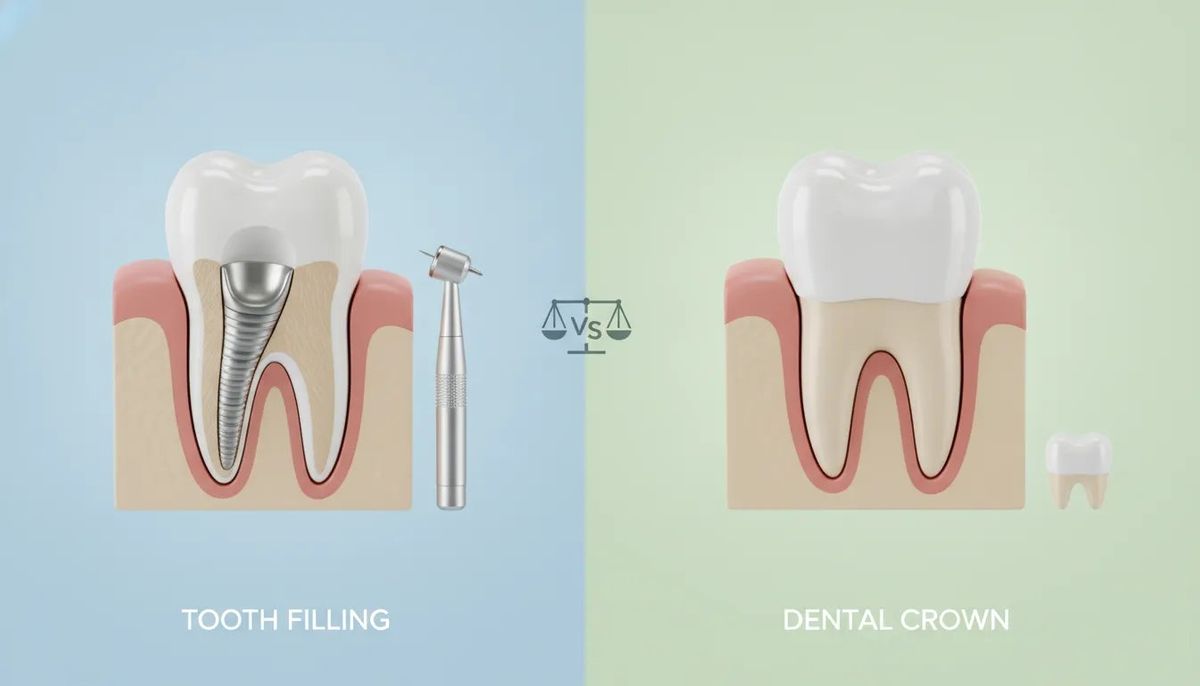
A toothache, crack, or old filling that’s starting to fail can leave you wondering what comes next. Will a filling be enough, or does the tooth need a crown? When comparing tooth filling vs crown: which treatment do you need depends on more than the size of the visible damage. Your dentist will look at the tooth’s overall condition, the amount of healthy structure left, and the pressure it takes when you bite. This guide explains how each treatment works, when dentists may recommend one over the other, and how to prepare for a conversation about your care.
Key Takeaways
Match the repair to the damage: Fillings often address smaller cavities or chips, while crowns may suit teeth that need more coverage and support.
Ask how your tooth affects the recommendation: Damage location, remaining healthy structure, bite pressure, and appearance can all shape your treatment options.
Discuss the full treatment plan: Ask about materials, appointment timing, recovery, insurance, and estimated costs before choosing a filling or crown.
Tooth Filling vs. Crown: What’s the Difference?
A filling and a crown both repair damaged teeth, but they’re designed for different levels of damage. A filling replaces a small area of missing tooth structure. A crown covers the visible part of a tooth to help protect one that has been weakened more extensively. Your dentist will consider the damage, the amount of healthy tooth remaining, and your bite before recommending a treatment.
How fillings repair cavities and minor damage
To treat a cavity, a dentist removes the decayed portion of the tooth and fills the space with restorative material. A filling is often a good option when the damage is limited and enough healthy tooth remains to support the repair. Tooth-colored fillings can be shaped to match your natural teeth, making them a discreet choice for many areas of the mouth.
Fillings may also repair some small chips, cracks, or worn spots. However, they don’t cover or reinforce the entire tooth. If damage affects a larger area, a filling may not provide enough support for chewing. The American Dental Association’s guide to fillings explains how dentists use them to restore teeth affected by decay or damage.
How crowns cover and protect weakened teeth
A crown is a custom-made covering that fits over the visible part of a tooth. A dentist may recommend one when extensive decay, a large fracture, or a previous filling has weakened too much of the tooth for a filling to provide reliable support. By covering the tooth, a crown restores its shape and helps protect the remaining structure as you chew.
Crowns may also be recommended after root canal treatment, depending on the tooth’s condition and how much healthy structure remains. The recommendation depends on your individual needs, not just the type of damage. Your dentist can explain whether a crown may help and discuss options for restorative dental care. Crowns are also commonly used to cover and protect chipped, cracked, or broken teeth, as Sonoran Desert Dentistry explains.
Compare preparation, materials, appearance, and appointments
A filling usually requires the dentist to remove decay or damaged tissue, then place and shape the filling material. For a crown, the dentist reshapes the tooth so the crown can fit over it. Depending on the tooth and the office’s technology, the crown may be made in a dental lab or produced at the office. Ask how many visits your treatment will take.
Both fillings and crowns come in materials chosen for strength and appearance. Tooth-colored fillings can blend with natural teeth. Crowns may be made from ceramic, porcelain, metal, or a combination of materials. The right choice can depend on the tooth’s location, your bite, and how much pressure it handles. Your dentist can review available dental services and explain which materials may suit your needs.
When Is a Filling Enough?
A filling may be suitable when damage is limited and enough healthy tooth remains to support the repair. The decision depends on more than the size of a visible spot: your dentist will consider the tooth’s condition, the location of the damage, and how you use it when chewing. An exam, sometimes with X-rays, can help determine whether a filling can restore the tooth or whether it needs more coverage.
Small cavities and limited decay
A filling is commonly used to treat a small cavity before decay affects a larger area of the tooth. Your dentist removes the decayed tissue, cleans the space, then fills it with restorative material. This option tends to work well when the damage is contained and the surrounding tooth is strong enough to support the repair. Small, contained areas of decay are often treated with a filling, but your dentist will assess the tooth before recommending treatment. If you notice sensitivity, discomfort, or a dark spot, an exam can help identify the cause and clarify whether a filling may be appropriate.
Minor chips, cracks, and worn areas
Fillings can repair some small chips, cracks, and worn spots, as well as cavities. A dentist may use filling material to restore a minor break or reshape an area affected by wear. This can help protect the damaged spot and restore the tooth’s surface. The depth and location of a crack matter, though. A deeper crack or a tooth with substantial damage may need more support than a filling can provide. Fillings may be used for minor breaks and worn areas, but an examination is needed to determine the extent of the damage and the most suitable repair.
How early treatment preserves natural tooth structure
Addressing a cavity or small area of damage early may help preserve more of your natural tooth. A filling repairs the affected area, while more extensive damage may call for a larger restoration. Early treatment cannot guarantee that a tooth will never need further care, but it gives your dentist an opportunity to assess the problem before it spreads. The choice depends on the cavity’s size and the tooth’s overall condition, as Sonoran Desert Dentistry explains. Regular dental visits can help catch changes early. RB Family & Cosmetic Dentistry provides general and restorative dental care for patients in Rancho Bernardo and nearby communities.
How fillings repair damage beyond cavities
Cavities are not the only reason a dentist may consider a filling. Small areas of tooth damage can also result from acidic foods and drinks, grinding, or gradual wear. If the damage is limited, filling material may restore the tooth’s shape and protect the affected area. The cause of the damage matters, too. For example, continued grinding may put pressure on a repair, so your dentist may discuss ways to address that habit alongside treatment. Fillings can repair some chipped, cracked, or worn teeth, but the best option depends on how much healthy tooth remains and where the damage is located.
When Is a Crown the Better Option?
A filling works well when damage is limited, but a tooth with extensive decay or a significant crack may need more coverage and support. A crown fits over the visible part of the tooth to restore its shape and help protect it during chewing. Your dentist will assess how much healthy tooth remains, where the damage is, and whether other treatment is needed before recommending a crown.
Extensive decay or a large, failing filling
When decay affects a large area, removing it may leave too little healthy tooth to support a filling. A crown may be recommended to cover and protect the remaining structure. It can also be an option if a large, older filling is cracked or failing, especially when the tooth around it has weakened.
The right choice depends on the amount of damage and the condition of the tooth. Your dentist can explain whether a filling, crown, or another treatment is appropriate. Explore restorative dentistry services to learn about options for repairing damaged teeth.
Cracked, broken, or weakened teeth
A minor chip may need only a small repair, while a deeper crack or larger break may call for a crown. By covering the visible portion of the tooth, a crown can help protect weakened areas from everyday biting and chewing forces. The recommended treatment depends on the crack’s size and location, along with how much healthy tooth remains.
If you notice a crack, avoid chewing hard foods on that side until a dentist can examine it. Crowns are commonly used to cover and protect cracked or broken teeth, but an exam is needed to determine whether a crown is suitable for your tooth.
Why dentists may recommend crowns after root canals
A root canal removes infected or damaged tissue from inside a tooth. The tooth may need additional protection afterward, particularly if decay, a crack, or earlier treatment has already weakened it. In some cases, a crown can cover the tooth and help reduce the chance of further damage.
A crown is not necessary after every root canal. The recommendation may depend on the tooth’s location, how much healthy structure remains, and the forces placed on it when you bite. Your dentist can explain why a crown may be appropriate and discuss other dental treatment options based on your needs.
How crowns restore shape, strength, and chewing function
A crown is shaped to fit over a prepared tooth, restoring its appearance and helping it function during biting and chewing. Because it covers more of the tooth than a filling, a crown may offer added support when decay, a fracture, or a large filling has left the tooth vulnerable. It can also help restore a tooth’s shape so it fits comfortably with the rest of your bite.
Crowns are not the right choice for every damaged tooth. Your dentist will consider the tooth’s condition and your bite before recommending treatment. Ask which materials are available and whether a same-day crown may suit your situation.
How Do Fillings and Crowns Compare?
Weigh the benefits and drawbacks of each treatment
A filling repairs a smaller area of damage while preserving more of your natural tooth. It may be a good option when decay or a chip has not weakened the tooth significantly. A crown covers the tooth and can provide added support when damage is extensive or little healthy structure remains. The tradeoff is that preparing a crown requires reshaping the tooth, and the initial cost may be higher.
Your dentist will consider the amount of damage, remaining tooth structure, bite pressure, and your goals for appearance and function. An exam and, when needed, X-rays help clarify which treatment can best protect the tooth. Learn more about dental services at RB Family & Cosmetic Dentistry.
Compare durability, maintenance, and replacement needs
Fillings and crowns both need consistent care. Brush twice a day, floss daily, and attend regular checkups so your dentist can monitor the repair and check for new decay. Neither treatment lasts forever. Its lifespan can depend on the material, tooth location, bite, and habits such as teeth grinding.
A filling may need replacement if it wears down, loosens, or develops decay around its edges. Crowns can also wear, crack, or come loose, but they generally last longer than fillings. Estimates vary, with fillings often lasting five years or longer and crowns lasting five to 15 years with proper care. Your dentist can explain what to expect for your tooth and discuss suitable restorative treatments.
See how tooth location and material affect appearance and longevity
The tooth’s location helps determine which material may work best. A filling on a front tooth may need to blend closely with surrounding enamel, while a back tooth must handle greater chewing pressure. Tooth-colored materials can provide a natural appearance, though the extent of damage also affects which option is appropriate.
Crowns come in several materials, each with its own balance of appearance, strength, and cost. For a badly chipped or cracked tooth, a crown may offer more coverage and protection than a filling. Ask your dentist how the tooth’s location, your bite, and your cosmetic preferences affect the recommendation. You can also explore cosmetic dentistry options if appearance is part of your decision.
Know what to expect during treatment and recovery
For either treatment, your dentist will numb the area to help keep you comfortable. For a filling, the dentist removes decay and fills the prepared space. A crown typically requires shaping the tooth so the crown can fit over it. Depending on your needs and the available treatment approach, you may receive a temporary crown or be a candidate for a same-day crown.
Some sensitivity or soreness can follow crown treatment and often improves with time. Follow your dentist’s care instructions, particularly while wearing a temporary crown. After a permanent crown is placed, most people can return to their usual diet, but avoiding sticky foods during the first 24 hours is a sensible precaution. Ask your dentist what recovery may look like for your specific treatment.
Separate myths from facts about discomfort, appearance, age, and maintenance
A filling or crown does not automatically mean a painful procedure. Local anesthesia helps reduce discomfort during treatment, though you may feel some pressure. Mild sensitivity afterward is possible. Contact your dentist if pain is severe, persistent, or getting worse.
Crowns are not limited to older adults. People of different ages may need one to address decay, a fracture, or another dental concern. Tooth-colored fillings and crowns can look natural, but the final appearance depends on the material, the tooth, and the fit. Both treatments still require daily brushing and flossing, along with regular dental checkups. If you are weighing appearance alongside tooth health, ask your dentist how each option may look and function over time.
What Affects the Cost of a Filling or Crown?
The cost of repairing a tooth depends on its condition and the care it needs. The size and location of the damage, the material chosen, insurance benefits, and possible future repairs can all affect your total. Your dentist can explain your options after an exam and any needed X-rays.
How the tooth, material, and treatment complexity affect cost
A small cavity may need a straightforward filling, while extensive decay or a large, failing filling may call for a crown to protect the remaining tooth. The tooth’s location and the material used can also affect the estimate. A front tooth may call for special attention to appearance, while a back tooth needs to withstand strong chewing pressure.
Sometimes, treatment involves more than a filling or crown. If decay has reached the inner part of the tooth, your dentist may recommend a root canal before placing a crown. Ask which steps are needed and how each one contributes to the overall cost. You can also review the practice’s restorative dentistry services to learn about treatments for damaged teeth.
Review insurance coverage, out-of-pocket costs, and estimates
Dental plans differ in what they cover and how much they pay. Before treatment, ask your insurer whether the proposed filling, crown, or related procedure is covered, and what portion you may owe. Coverage may also depend on plan limits, waiting periods, and other terms. Your dental office can often provide an estimate, though your insurer confirms the final benefit.
Ask for an itemized treatment plan that lists each procedure and its estimated cost. If more than one treatment is appropriate, ask your dentist to compare the options, including their benefits and expected costs. This can help you plan for your share and understand why a particular treatment is recommended. An estimate is useful for planning, but it may change if the tooth needs additional care.
Consider how durability and future repairs affect long-term cost
A filling may cost less initially, but its suitability depends on how much healthy tooth remains and how much pressure the tooth takes. Larger fillings may be more likely to crack, leak, or need replacement. Crowns generally cost more upfront, but may offer longer-lasting protection when a tooth needs added support. Laurel Smile Dentistry explains why the extent of damage matters when comparing these treatments.
When weighing costs, consider the care a tooth may need over time, not only the first bill. Replacing a restoration can add expense, and untreated damage may require more involved care later. Ask your dentist about the expected benefits, alternatives, and potential future repairs for each option. There is no single lifespan or cost that applies to every tooth, so your dentist’s assessment is the best guide for your treatment plan.
How Does a Dentist Choose the Right Treatment?
How exams, X-rays, symptoms, and bite reveal tooth damage
Your dentist will examine the tooth and ask about symptoms such as sensitivity, pain when chewing, or a recent injury. They may take X-rays to check for decay or damage beneath the surface, and test how the tooth responds to temperature or pressure. These checks help show whether the tooth’s inner tissue may be affected.
Your bite is another piece of the picture. A tooth that takes on more chewing pressure may need additional support, especially if it is already weakened. Your dentist considers the exam, imaging, symptoms, and bite together before recommending a filling or crown. You can learn about the range of dental services at RB Family & Cosmetic Dentistry.
How remaining tooth structure and oral health shape recommendations
The amount of healthy tooth structure left can help determine whether a filling will provide enough support. A small cavity may leave plenty of strong tooth around it, while extensive decay or a large, failing filling can leave the tooth more likely to crack. In that case, a crown may be recommended to cover and protect the remaining structure.
Your dentist will also consider your gum health, oral hygiene, bite, and other factors that may affect treatment. The aim is to address the damage while preserving as much natural tooth as possible. This overview of fillings and crowns explains how the extent of damage can influence a recommendation.
Ask about alternatives, comfort, recovery, and eating afterward
It’s reasonable to ask why your dentist recommends a filling or crown and whether another treatment could be appropriate. Ask what the procedure involves, how many visits it may take, and what you can expect afterward. Your dentist can also explain when you can eat normally and how to care for the treated tooth.
Some people have sensitivity or discomfort after crown treatment. Ask what symptoms are common, how long they may last, and when to contact the office. Getting clear answers before treatment can help you feel prepared. This guide to recovery after a dental crown describes some changes people may notice as the tooth settles.
Find out if a same-day crown may suit your needs
Some dental practices use in-office technology to design and place a crown during one visit. Whether that option suits you depends on the tooth’s condition, the restoration needed, and your dentist’s assessment. Ask if a same-day crown is available, what materials are used, and how the process compares with a crown made by a dental laboratory.
A crown may be used to cover and protect a tooth that is chipped, cracked, or broken, but not every damaged tooth needs one. Your dentist can explain the options after examining your tooth. RB Family & Cosmetic Dentistry offers restorative dental services, including same-day crowns, and can discuss whether one may fit your needs.
Understand your treatment plan through personalized care
A treatment plan should reflect the condition of your tooth, your overall oral health, and your priorities. Ask your dentist to show you what they found and explain why they recommend a filling or crown. It can also help to discuss appearance, comfort, timing, and cost before treatment begins.
At RB Family & Cosmetic Dentistry, the team provides personalized care and can walk you through your options and what to expect. If you’re unsure about a recommendation, ask questions until the plan is clear. You can learn more about Dr. Nina Hashemi and the practice, then discuss your concerns and goals with the dental team.
Related Articles
Frequently Asked Questions
Can a filling be replaced with a crown later?
Yes. If a tooth becomes more damaged or a filling no longer provides enough support, your dentist may recommend a crown. Regular checkups can help your dentist monitor the tooth and discuss next steps if its condition changes.
Does every tooth need a crown after a root canal?
No. The need for a crown depends on how much healthy tooth remains, the tooth’s location, and the pressure it takes when you bite. Ask your dentist how these factors apply to your tooth.
Are fillings or crowns more painful to get?
Both treatments are typically done with local anesthesia to help keep you comfortable. You may notice pressure during treatment or some sensitivity afterward. Contact your dentist if discomfort is severe or does not improve.
Can I get a crown in one visit?
Some offices offer same-day crowns using in-office technology. Whether one is an option depends on your tooth and the treatment it needs. Ask your dentist about the process, materials, and number of visits.
How can I tell whether I need a filling or a crown?
You usually can’t determine this by appearance alone. A dentist can examine the tooth and may take X-rays to assess the damage and remaining structure. An exam at RB Family & Cosmetic Dentistry can help clarify which treatment may suit your needs.