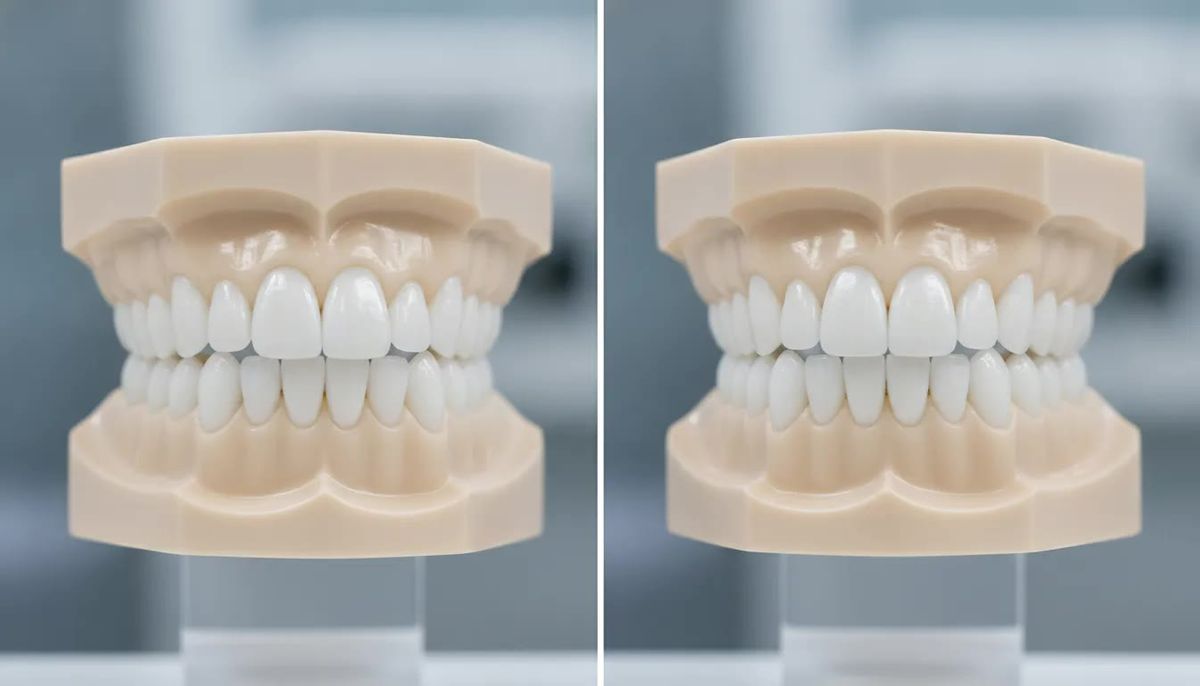
A tooth with a small chip may need a different solution than one weakened by a large filling or crack. That’s why deciding between veneers and crowns starts with the health of the tooth, not just the result you want. Porcelain veneers vs crowns is a common comparison because both restorations can be made to blend with nearby teeth, but they cover different areas. Veneers are thin shells bonded to the front surface. Crowns fit over the visible portion of a tooth and can provide more coverage. Learn how dentists assess each option, what treatment may involve, and how to discuss the choice with your dental team.
Key Takeaways
Match treatment to the tooth’s needs: Veneers typically address cosmetic concerns on healthy teeth, while crowns cover and support teeth with more extensive damage.
Get an exam before choosing: Tooth health, bite, location, and grinding habits can affect which restoration is appropriate.
Ask about long-term care and costs: Discuss tooth preparation, alternatives, maintenance, insurance, and fees with your dentist before deciding.
What Are Porcelain Veneers and Crowns?
Porcelain veneers and crowns can both change a tooth’s appearance, but they cover different areas and serve different purposes. A veneer bonds to the front of a tooth, while a crown covers the visible portion above the gumline. The right choice depends on the tooth’s condition, your goals, and how much coverage it needs. An exam can help clarify your options. Explore cosmetic dentistry at RB Family & Cosmetic Dentistry to learn about treatments for improving the look of your smile.
Veneers cover the front of a tooth
A porcelain veneer is a thin shell bonded to the front surface of a tooth. It may help improve the appearance of discoloration that does not respond well to whitening, small chips, worn edges, minor gaps, or slight unevenness. Since a veneer covers only the front, it is generally considered for teeth that are healthy enough to support it.
Veneers are custom-made to complement the color and shape of nearby teeth. They are not suitable for every concern, especially when a tooth has significant damage or decay. A dentist can assess your teeth and explain which treatments may fit your needs. This overview of veneers and crowns explains how their coverage differs.
Crowns cover the entire visible tooth
A dental crown is a custom-made cap that covers the visible part of a tooth above the gumline. It surrounds the tooth, restoring its shape and helping it withstand everyday biting and chewing. A dentist may recommend a crown when a tooth has been weakened by extensive decay, a crack, a large filling, or root canal treatment.
Crowns are made from different materials, and the choice can depend on the tooth’s location, strength needs, and appearance. The dentist prepares the tooth so the crown can fit securely, then selects a suitable shade and material. You can explore restorative dentistry options at RB Family & Cosmetic Dentistry.
Veneers improve appearance; crowns restore and protect
Veneers mainly address cosmetic concerns on teeth that are otherwise in good condition. Crowns have a restorative role: they cover and help protect teeth that have lost strength or structure. A crown can also improve a tooth’s appearance, but its full coverage makes it different from a veneer.
The distinction matters because treatment should match the tooth’s health, not just your preferred result. A veneer may be appropriate when a tooth needs a change to its front surface, while a crown may be considered when the tooth needs broader coverage and support. Your dentist can explain the benefits and tradeoffs after examining the tooth. For another perspective, read this comparison of dental crowns and veneers.
How Do Veneers and Crowns Compare?
Coverage, materials, and purpose
A porcelain veneer is a thin shell bonded to the front of a tooth. Dentists often recommend veneers to improve the look of healthy teeth with discoloration, small chips, or minor gaps. A crown covers the tooth’s visible surface all the way around, helping restore its shape and protect a tooth that has been weakened or damaged.
Both options can be made from tooth-colored porcelain or ceramic. Crowns may also use metal or a combination of materials, depending on the tooth and the forces it needs to withstand. The main difference is their purpose: veneers focus on appearance, while crowns provide more coverage and support. Your dentist can discuss which option fits your goals during a cosmetic dentistry consultation.
Tooth preparation and enamel preservation
Veneers generally require less reshaping than crowns. To make room for a veneer, a dentist usually removes a thin layer of enamel from the front of the tooth. A crown needs to fit over the tooth, so preparation typically involves reshaping more of its surface. The exact amount depends on the tooth’s condition and the restoration being planned.
Both procedures can permanently alter tooth structure. Veneer placement often involves removing enamel, so it’s generally not reversible. A crown may be recommended when a tooth needs more extensive coverage to restore strength and function. Your dentist will assess how much healthy tooth remains and explain the tradeoffs before treatment. You can also review RB Family & Cosmetic Dentistry’s restorative dentistry services.
Appearance, fit, and eligible teeth
Veneers can address stains that don’t respond well to whitening, small chips, worn edges, or slight unevenness. They’re usually best for teeth that are healthy and have enough enamel to support bonding. If a tooth has extensive decay or significant structural damage, a veneer may not provide the coverage it needs.
A crown can restore a tooth’s shape and appearance while covering it more fully. It may be considered when a tooth is weakened by a crack, a large filling, or other damage. Tooth location also matters: back teeth handle greater chewing forces, and bite problems or grinding may affect which restoration is suitable. An exam helps your dentist assess your tooth and discuss options, including the broader dental services offered by the practice.
When Might Veneers or Crowns Suit You?
The right option depends on the tooth’s health, the changes you want, and how your teeth fit together. Veneers are often used to improve the appearance of healthy teeth, while crowns can restore and protect teeth with more extensive damage. A dental exam helps determine which treatment, if either, fits your needs.
Veneers for cosmetic concerns on healthy teeth
Porcelain veneers may be an option if your teeth are generally healthy but you’d like to change their appearance. They cover the front surface of a tooth and can address some stains, small chips or gaps, worn edges, and slight unevenness. Because veneers are commonly placed on front teeth, they can be considered when appearance is a main concern.
Veneers don’t treat decay or repair substantial structural damage. Your dentist will check the tooth, gums, and bite before recommending them. If you’re considering a smile change, explore cosmetic dentistry at RB Family & Cosmetic Dentistry and discuss which treatments may suit your goals.
Crowns for teeth weakened by decay, cracks, large fillings, or root canals
A crown covers the entire visible portion of a tooth. It may be recommended when a tooth has extensive decay, a crack, a large filling, or has been treated with a root canal. A crown can also be considered when little natural tooth structure remains, helping restore the tooth’s shape and protect it during everyday use.
Unlike a veneer, which covers only the front surface, a crown surrounds the tooth. The choice depends on how much healthy tooth structure remains and the type of repair needed. Learn more about restorative dentistry options and ask your dentist how each option applies to your tooth.
How tooth location, bite, and grinding affect treatment
A tooth’s position and the pressure it handles can influence the recommendation. Back teeth, including molars, take on significant chewing forces. If one needs substantial repair, a crown may be more suitable. Veneers are more commonly considered for front teeth when the concern is cosmetic and the tooth is otherwise healthy.
Your bite and habits such as clenching or grinding also matter. Repeated pressure can wear or damage dental restorations, so tell your dentist if you grind your teeth or wake with jaw soreness. An assessment of your tooth and bite helps guide the recommendation. Read more about how dentists compare veneers and crowns.
Treat decay and gum problems first
Active tooth decay and gum problems usually need attention before cosmetic or restorative treatment. A veneer or crown can’t resolve the underlying cause of infection or inflammation, and placing one before addressing these issues may affect the tooth’s health. Your dentist will examine your teeth and gums and may recommend imaging to understand what’s happening below the surface.
Share any pain, sensitivity, bleeding gums, or recent changes in a tooth during your appointment. After assessing your oral health, your dentist can explain what needs treatment first and whether a veneer or crown is appropriate. This helps ensure your plan addresses both the appearance of your smile and the health of your teeth.
What Happens During Treatment?
The steps for porcelain veneers and crowns depend on the condition of the tooth and the type of restoration. Treatment often involves an exam, preparation of the tooth, and a custom restoration made to fit. Your dentist will explain the recommended approach, how many visits to expect, and what to know about recovery.
Exam, imaging, and treatment planning
Your dentist will examine the tooth and surrounding gums, then check how your teeth meet when you bite. They may take X-rays to look for decay or other concerns that can’t be seen during a visual exam. The tooth’s health, location, and bite help determine whether a veneer or crown may be suitable.
A veneer may be considered when the tooth is healthy but has a cosmetic concern. A crown may be an option when a tooth needs more coverage or support. Your dentist will also discuss your goals and whether concerns such as decay or gum disease need attention before treatment. An exam, imaging, and bite check can help guide the decision, as Innovasmiles Dental explains. You can also explore cosmetic dentistry services at RB Family & Cosmetic Dentistry.
Prepare the tooth, take impressions, and place the restoration
Before placing a veneer, the dentist usually removes a thin layer of enamel from the front of the tooth to make room for the porcelain. A crown covers more of the tooth, so its preparation generally involves reshaping more of the tooth. If decay or damage has weakened it, the dentist may need to rebuild part of the tooth before placing the crown.
Next, the dentist takes an impression or digital scan to help create a restoration that fits your tooth. When the custom veneer or crown is ready, the dentist checks its fit and appearance, then bonds or cements it in place. The amount of preparation varies by tooth and treatment plan. Healthline’s overview of veneers and crowns describes common preparation steps.
Temporary restorations, sensitivity, and recovery
If a dental lab needs time to make your permanent restoration, your dentist may place a temporary veneer or crown to protect the prepared tooth. At a later visit, they remove the temporary, check the fit of the permanent restoration, and secure it in place. The number and timing of appointments depend on your needs and the restoration being made.
Some people notice sensitivity to hot or cold after treatment. It may last for several days or, in some cases, weeks. Follow your dentist’s care instructions, and contact the office if discomfort is severe, gets worse, or does not improve. Your dental team can explain what sensations to expect and how to care for your tooth while it settles. Ashley Harrison DDS outlines a common crown process.
Treatment may permanently change tooth structure
Veneers and crowns generally require removing some natural tooth structure. Because enamel does not grow back, this preparation is usually irreversible. A veneer typically requires removing a thin layer from the front of the tooth, while a crown requires reshaping more of the tooth so it can fit over it.
A tooth prepared for a crown will continue to need a crown or another full-coverage restoration. Before deciding, ask your dentist how much tooth structure the treatment may remove, whether a less invasive option could work, and what future maintenance may involve. The best approach depends on your tooth and overall oral health. Your dentist can explain the options as part of a personalized restorative dentistry plan.
What Are the Benefits and Tradeoffs?
Appearance, tooth preservation, and protection
Veneers and crowns can both change a tooth’s appearance, but they cover different areas. A porcelain veneer bonds to the front of a tooth, so it may suit a healthy tooth with discoloration, a small chip, or an uneven shape. A crown covers the entire visible portion of a tooth, offering more support when the tooth is weakened or significantly damaged.
Veneers generally require less tooth preparation than crowns, although some enamel usually needs to be removed. Crowns require more coverage and preparation, but can help restore a tooth’s shape and function. The best option depends on the tooth’s condition, not just the cosmetic goal. A cosmetic dentistry consultation can help clarify which treatment may fit your needs.
Chipping, damage, sensitivity, and repair options
Veneers may chip or crack, especially if you bite hard objects, grind your teeth, or experience an injury. Crowns can also chip or loosen, and decay may develop near their edges. Neither restoration makes a tooth immune to damage, so your bite and daily habits are important parts of treatment planning.
Some people experience sensitivity after tooth preparation, though the level and duration vary. If a restoration is damaged, your dentist can examine it and determine whether repair or replacement is appropriate. The decision depends on the damage and the condition of the tooth underneath. Healthline’s overview of veneers and crowns explains how the two options differ in coverage and purpose.
Daily care and maintenance
Veneers and crowns need the same steady care as natural teeth. Brush twice a day with fluoride toothpaste, clean between your teeth daily, and attend regular dental checkups. These habits help protect the gums and natural tooth around a restoration, including the margins where decay can form.
Avoid biting hard objects or using your teeth to open packages. If you clench or grind your teeth, let your dentist know. A custom night guard may help limit pressure on restorations while you sleep. Good habits cannot guarantee a specific lifespan, but they can reduce avoidable wear and support your oral health. RB Family & Cosmetic Dentistry offers restorative dental services for teeth that need repair or additional support.
Facts about reversibility, durability, and treatment limits
Veneers and crowns both involve preparing the tooth, and that change is generally permanent. Veneers often require less tooth removal than crowns, but the surface still needs alteration. After preparation, the tooth will usually need a restoration going forward.
Neither treatment is right for every tooth. Veneers are often considered when a tooth is mostly intact and the main goal is cosmetic. Crowns may be recommended when a tooth is weakened or extensively damaged and needs broader coverage. Both can be used on front teeth, depending on the tooth’s condition and the desired result. Your dentist will assess your teeth, bite, and gums before suggesting a plan. Learn more about the practice’s approach to personalized dental care.
How Long Do Veneers and Crowns Last?
Typical lifespan and factors that affect it
Porcelain veneers often last about 10 to 15 years with proper care, while composite veneers typically last around 5 to 7 years. Porcelain, ceramic, and zirconia crowns may also last roughly 10 to 15 years. These are estimates, not guarantees. Material, tooth condition, bite, and daily habits can all affect how long a restoration lasts.
Crowns cover the entire visible part of a tooth, which can provide more support when a tooth needs to withstand significant biting pressure. Veneers cover only the front surface and are generally used to change the appearance of teeth that are otherwise healthy. Read more about how these restorations compare in Healthline’s guide to veneers and crowns.
How hygiene, dental visits, and protective habits help
Brush twice a day and floss daily to care for the natural tooth and gums around a veneer or crown. A crown cannot develop a cavity, but the tooth beneath it can still decay, especially near the edge of the restoration. Regular dental visits help your dentist check the restoration, examine your gums, and look for early signs of wear or other concerns.
Everyday habits matter, too. Avoid chewing ice, biting your nails, or using your teeth to open packaging, since these actions can put unnecessary stress on restorations. If a veneer or crown feels loose, sharp, or uncomfortable, contact your dentist for advice. Routine exams and personalized care are part of RB Family & Cosmetic Dentistry’s dental services.
How grinding and mouthguards affect wear
Clenching and grinding can put extra pressure on teeth and restorations. Over time, that force may cause a veneer or crown to chip or become damaged. If you wake with jaw soreness or headaches, or notice worn teeth, bring it up with your dentist. They can check for signs of grinding and discuss whether a custom night guard may suit your needs.
A night guard can help protect restorations by cushioning the teeth, though it cannot prevent every type of damage. Crowns may chip or loosen, and problems can develop around their edges, so keep up with checkups even if everything feels comfortable. Healthline explains how grinding may affect veneers and crowns.
How Much Do Veneers and Crowns Cost?
Typical prices and cost factors
Porcelain veneers may cost about $925 to $2,500 per tooth, while crowns may range from $1,000 to $3,500 per tooth. These are general estimates, not a quote. Your total can vary based on where you live, the dental office, the materials used, and how much preparation or additional treatment your tooth needs. The Healthline comparison of veneers and crowns provides a helpful overview of typical costs.
When you request an estimate, ask what it includes. For example, does the price cover imaging, temporary restorations, placement, and follow-up visits? A dental exam can clarify the recommended approach and the fees involved. RB Family & Cosmetic Dentistry offers cosmetic dentistry and restorative care for patients in Rancho Bernardo and nearby communities.
Insurance coverage and out-of-pocket costs
Veneers are usually considered cosmetic, so dental insurance may not cover them. Crowns may qualify for coverage when a dentist recommends one to repair or protect a damaged tooth. Coverage depends on your plan, though, and you may still owe a deductible, coinsurance, or costs above your plan’s allowance. This overview of crown and veneer costs explains why insurance treatment can differ between the two procedures.
Before scheduling, contact your insurer to ask whether the proposed treatment is covered and what you may owe. Your dental office may also be able to submit a pre-treatment estimate, giving you a clearer picture of your expected benefits. Ask for an itemized treatment estimate as well, so you can review the planned care and fees before making a decision.
How the tooth, materials, and treatment plan affect cost
The condition of the tooth and your goals help determine which option your dentist may recommend. A veneer may suit a healthy tooth when the main concern is its appearance. A crown covers more of the tooth and may be recommended when it needs added support. Crown materials include porcelain, ceramic, zirconia, metal, and porcelain fused to metal, and the choice can affect the fee. This comparison of crowns and veneers outlines factors dentists consider when discussing treatment.
The overall cost may also include care needed before the restoration, such as treating decay. Ask your dentist to explain why a particular option is recommended, whether alternatives are appropriate, and what each treatment is expected to cost. An exam can help connect the treatment plan to the health of your tooth and your priorities.
Which Option Fits Your Dental Needs?
What a dental exam can determine
Choosing between a porcelain veneer and a crown starts with the condition of the tooth, not just the result you hope to see. Your dentist will examine the tooth and may use X-rays and a bite check to assess its structure, how it meets opposing teeth, and whether decay or other problems need attention first. As Innovasmiles Dental explains, an exam helps determine which restoration may be suitable.
Your dentist will also consider gum health, existing fillings, cracks, and signs of grinding. These details affect how a restoration may look and function when you eat and speak. At RB Family & Cosmetic Dentistry, an evaluation can help clarify your options and whether any other dental concerns should be treated first.
Questions to ask about goals, risks, and alternatives
Start by describing what you want to change. Are you concerned about discoloration, a chip, uneven edges, or a tooth that feels weak? Sharing your goals helps your dentist explain whether a veneer or crown may address the concern and what results you can reasonably expect.
Ask how much natural tooth structure each option would require removing, what risks or maintenance to expect, and whether alternatives such as whitening or a filling could work. You can also discuss cost and how the restoration may affect your long-term oral health. The recommendation should reflect your tooth’s condition, bite, appearance, and budget, as NZA Dental notes. If your main goal is a smile change, explore RB Family & Cosmetic Dentistry’s cosmetic dentistry services.
Weigh tooth health, appearance, preparation, durability, and budget
Veneers are often considered when a tooth is healthy but has a cosmetic concern. Crowns cover more of the tooth and may be recommended when it has extensive decay, a crack, a large filling, or needs protection after root canal treatment. In general, veneers focus on appearance, while crowns provide greater coverage and protection, as 44 West Dental describes.
Preparation matters, too. Veneers typically require less tooth alteration than crowns, but either treatment may permanently change the tooth. Your bite, the tooth’s location, and habits such as grinding can affect the restoration’s durability. Costs and expected lifespan also vary based on materials and your individual treatment plan. Ask your dentist to compare the benefits, limitations, and costs for your tooth, and review the practice’s restorative dentistry services to learn about treatment options.
Frequently Asked Questions
Can a veneer replace a crown?
Not always. A veneer covers only the front of a tooth, while a crown covers the visible tooth all around. If a tooth is significantly weakened or damaged, your dentist may recommend a crown instead.
Are veneers or crowns reversible?
Usually not. Both treatments often require removing some natural tooth structure, and enamel does not grow back. Ask your dentist how much preparation your tooth may need and whether another option is appropriate.
Which option usually costs more?
Costs vary by location, materials, and the condition of the tooth. Veneers are often considered cosmetic, while insurance may cover some crown treatment when it is needed to repair a tooth. Request an itemized estimate and check your benefits before scheduling.
How can I protect a veneer or crown?
Brush twice a day, floss daily, and keep up with dental checkups. Avoid chewing ice or using your teeth to open packages. If you grind or clench your teeth, ask your dentist whether a night guard may help protect your restoration.
How do I know which treatment is right for me?
A dental exam helps your dentist assess the tooth, gums, and bite, and identify any decay or damage. Share what you’d like to change and ask about preparation, alternatives, maintenance, and cost before deciding.