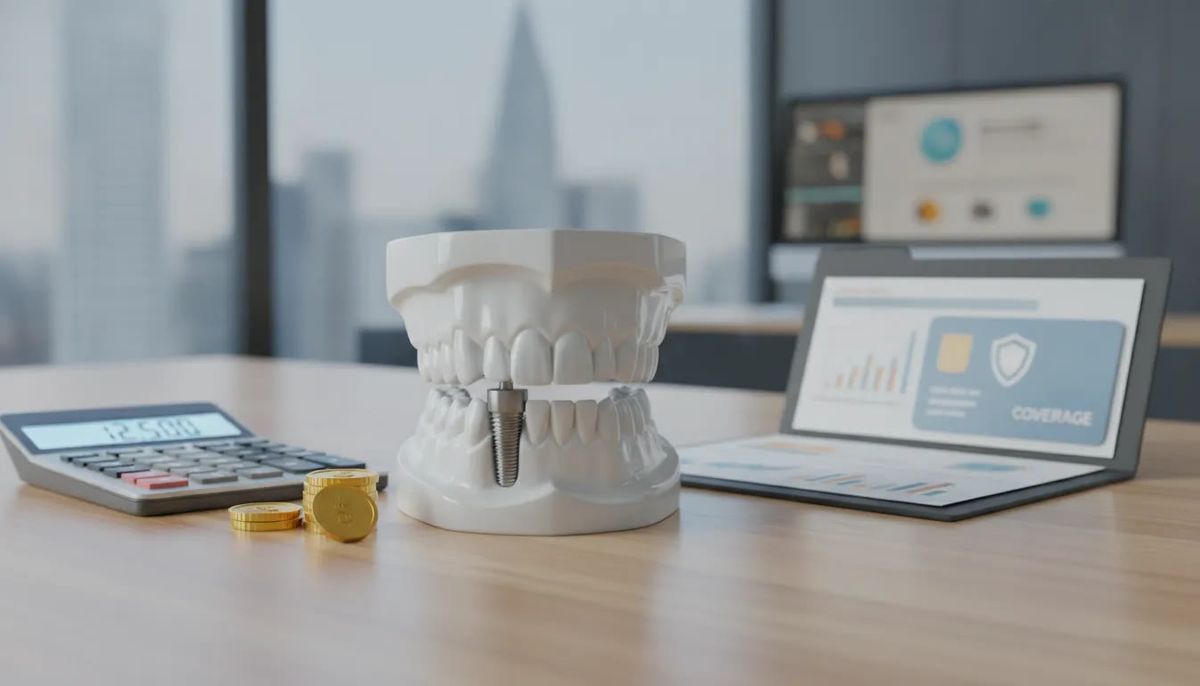
The price of a dental implant can look straightforward until you learn how many parts and appointments treatment may involve. A single implant may require a post, an abutment, and a crown, while some patients also need an extraction, bone graft, or other care. Insurance adds another layer, since plans may assess each service differently. Understanding dental implant cost and insurance coverage starts with knowing what your estimate includes and what your policy may pay. In this guide, we’ll explain common cost factors, questions to ask your insurer, and ways to prepare for out-of-pocket expenses before treatment begins.
Key Takeaways
Request a complete, itemized estimate: Check that it lists the implant, abutment, crown, visits, imaging, and any recommended additional procedures.
Confirm insurance details directly with your insurer: Ask how each service is covered, what benefits remain, and whether limits or exclusions apply. Treat estimates as guidance, not guaranteed payment.
Compare treatment options and plan ahead: Discuss implants, bridges, and dentures with your dentist, then ask about payment timing and available financing.
How Much Do Dental Implants Cost?
Dental implant costs vary based on how many teeth you’re replacing, the type of restoration you need, and whether you need other procedures before placement. A written, itemized estimate can show what your treatment includes and help you ask your insurer about possible benefits. RB Family & Cosmetic Dentistry provides restorative dental care in Rancho Bernardo, including dental implants.
Typical costs for one implant, several teeth, or a full arch
A single dental implant may cost about $3,000 to $6,000 before insurance. For patients with implant coverage, estimated costs may range from $1,500 to $4,500 per tooth, but your actual share depends on your plan’s benefits and limits. These figures are general estimates, not a personalized quote.
Replacing several teeth may involve individual implants or an implant-supported bridge. A full-arch restoration, such as All-on-4, may cost between $20,000 and $50,000 before insurance. The Dental Plus Clinic cost guide gives a broad overview of these ranges. Ask your dentist which approach fits your needs and how many implants and replacement teeth your treatment plan includes.
What a complete estimate may include: implant, abutment, crown, imaging, and visits
An implant estimate may cover more than the post placed in your jaw. For a single-tooth restoration, the main components are the implant post, an abutment that connects the post to the replacement tooth, and a crown. MetLife’s cost breakdown estimates the post at $1,000 to $3,000, the abutment at $500 to $1,000, and the crown at $800 to $3,000.
The estimate may also include imaging, planning appointments, implant placement, and follow-up visits. Since offices may bundle or bill for these services differently, request an itemized treatment plan and check whether the final crown is included. Costs can vary based on your provider, location, insurance plan, and the services your treatment requires, as Humana explains.
Extra costs for extractions, anesthesia, temporary teeth, and follow-up care
Some patients need treatment before an implant can be placed. This may include extracting a damaged tooth or preparing the jaw with a bone graft or sinus lift. These procedures can add hundreds or thousands of dollars, depending on the work involved. Guardian’s overview of implant coverage reports that bone grafts may cost from $300 to $4,000.
Anesthesia, temporary teeth, and follow-up care may also affect your total, and these charges may be listed separately. Ask which procedures your dentist recommends, what each one costs, and whether the estimate includes temporary and final restorations. You can also ask how the cost might change if an additional procedure becomes necessary. Clarifying these details before treatment helps you plan for the full cost, not just the implant placement.
Why advertised starting prices may differ from your estimate
An advertised starting price may cover only part of treatment or apply to patients with straightforward needs. It might not include the abutment, crown, imaging, extraction, grafting, anesthesia, or follow-up appointments. The price may also assume that no additional care is needed.
Insurance can make your personal estimate different, too. Plans may have deductibles, annual maximums, exclusions, or limits on implant benefits. Some may cover related services, such as an extraction or crown, while excluding the implant itself. Request an itemized estimate and confirm your benefits with your insurer. A pre-treatment estimate can help you understand expected coverage, but it does not guarantee the insurer’s final payment.
What Affects Dental Implant Costs?
Dental implant costs depend on more than the implant post. The type of restoration, how many teeth need replacement, your oral health, and the services included in your treatment plan can all affect the total. An advertised starting price may not include every step needed for your care.
A dental exam and personalized treatment plan can help clarify which procedures apply to you. RB Family & Cosmetic Dentistry provides a range of restorative dental services and can explain options based on your oral health and goals.
Materials, restoration type, and treatment complexity
A dental implant restoration typically includes an implant post placed in the jaw, an abutment that connects the post to the replacement tooth, and a crown or another type of restoration. The materials and design of each part can affect the estimate. For example, MetLife’s cost overview gives a general range of about $3,000 to $6,000 for one implant, with separate costs for the post, abutment, and crown.
Treatment complexity also matters. Your plan may include imaging, additional appointments, or other care before the restoration is complete. Ask which components, materials, and visits are included so you can see what the quoted price covers.
Number of teeth replaced and final restoration type
Replacing one tooth usually involves a different plan from replacing several teeth or a full arch. One implant may support a single crown. For multiple missing teeth, your dentist may discuss several implants or an implant-supported bridge or denture. The number of implants and the type of restoration both affect the total.
The estimate may also depend on the work needed to design and fit the replacement. One cost guide from Dental Plus Clinic cites a range of $1,500 to $4,500 per tooth for patients with insurance, but costs vary with the plan and treatment involved. Ask your dentist why a specific restoration is recommended and whether the estimate includes the full replacement, not just the implant post.
Preparatory procedures, such as bone grafts, sinus lifts, and extractions
Some patients need treatment before an implant can be placed. An extraction may be recommended if a damaged tooth cannot be saved. If there isn’t enough bone to support an implant, your dentist may discuss a bone graft. In some cases, a sinus lift may be needed for an implant in the upper back jaw.
These procedures can add fees and may require additional healing time. The cost depends on the treatment and its complexity. Dental Plus Clinic’s cost guide notes that bone grafts, sinus lifts, and extractions may add $500 to $3,000 per procedure. This is a general range, not a personalized quote. Ask which procedures your treatment plan includes and whether they’re priced separately.
Provider experience, specialist care, and local pricing
Implant treatment may involve a general dentist, an oral surgeon, or a team of providers, depending on your needs. The services performed, provider experience, and local fees can all affect the estimate. For that reason, quotes from different practices may not cover the same care.
Insurance can shape your out-of-pocket costs, but it doesn’t necessarily determine a provider’s fees. Humana’s overview of implant coverage notes that costs can vary by location, provider, dental plan, and the services involved, such as tooth removal, implant placement, and fitting the replacement tooth. Ask who will perform each part of your care and how the providers will coordinate. RB Family & Cosmetic Dentistry has an oral and maxillofacial surgeon on its team, which may be relevant when discussing your treatment options.
How to compare estimates by checking what they include
Compare itemized estimates, not just the total. Check whether each one includes the implant post, abutment, crown or other restoration, imaging, consultations, anesthesia, temporary teeth, and follow-up visits. Ask whether any recommended procedures, such as an extraction or bone graft, are included or listed as separate costs.
If you plan to use insurance, request an itemized treatment plan with the proposed services and fees. Your insurer may provide a pre-treatment estimate, but the response isn’t a guarantee of final payment. A personalized cost estimate can help you understand the expected fees alongside your benefits. Before scheduling treatment, ask the dental office to clarify any item or potential cost you don’t understand.
How Does Dental Insurance Cover Implants?
Dental insurance may help pay for some parts of implant treatment, but coverage depends on your policy and the services your dentist recommends. A plan may cover one part of treatment and exclude another, so it helps to check each item before care begins. Ask your insurer for details based on your specific treatment plan, and keep its response for reference.
Why coverage depends on your plan and policy
There is no single rule for dental implant coverage. Some plans exclude implants, while others may contribute when treatment meets the plan’s definition of a covered or medically necessary service. The policy may also consider when and why the tooth was lost, whether the plan has waiting periods, and whether you have used other benefits during the year.
Even if implants are included, coverage may not extend to every part of treatment. Consultations, X-rays, extractions, bone grafts, anesthesia, and the final crown may each be assessed separately. Humana’s guide to implant coverage outlines how these services can receive different coverage. Ask your insurer to explain your policy’s terms, and review the treatment plan with your dentist. RB Family & Cosmetic Dentistry provides restorative dental care for patients who need to replace or repair teeth.
How benefits may vary for implants, crowns, and related services
An implant restoration often includes several parts: a post placed in the jaw, an abutment that connects the post to the replacement tooth, and a crown or other restoration. Your insurer may classify each item differently. For instance, the plan may exclude the implant post but offer a benefit toward the crown, or cover an extraction while limiting benefits for bone grafting.
Ask your insurer which treatment codes and components are eligible for benefits, and what percentage may apply to each. A quoted coverage percentage may refer to only one service, not the full treatment. It may also apply only after you meet your deductible and while you have annual benefits remaining. An itemized treatment plan can help you compare proposed services with the details of your policy.
Deductibles, coinsurance, annual maximums, waiting periods, and exclusions
A deductible is the amount you pay for eligible care before your plan starts contributing. Coinsurance is the portion of a covered service you pay after meeting the deductible. An annual maximum is the most your plan will pay during a benefit year. Some policies also have waiting periods before certain services qualify, as well as exclusions that limit coverage for specific procedures or situations.
Annual maximums vary by plan. Some fall in the range of $1,000 to $2,500, but your policy may have a different limit. Even if an implant-related service is covered, a low remaining maximum can leave you responsible for a large share of the cost. The Dr. Bernstein DDS overview of implant coverage discusses how annual limits affect benefits. Ask your insurer how much of your maximum remains and when it resets.
Missing-tooth clauses, alternate benefits, and other limitations
A missing-tooth clause may limit or exclude benefits for replacing a tooth that was already missing before your coverage began. Another provision, sometimes called an alternate benefit, may base the insurer’s payment on a less expensive treatment, such as a bridge or denture, even if you and your dentist choose an implant.
Ask whether either provision applies to your case, and request an explanation of how the plan will calculate its payment. Implant coverage rarely pays for the full cost of treatment. Your share depends on the policy, the services included, and any applicable limits. The Dr. Bernstein DDS guide notes that many plans cover only part of eligible implant costs. Confirm the details with your insurer before making decisions based on an estimated benefit.
When medical insurance may cover part of treatment
Medical insurance generally focuses on health care rather than routine dental treatment, but a plan may review some implant-related services when they are connected to a covered medical condition, injury, or procedure. Whether it pays anything depends on the terms of your medical policy and the reason treatment is needed. Coverage may apply to only certain services, rather than the full implant process.
Before treatment, call your medical insurer and ask whether it reviews implant-related care, what records it needs, and whether you need a referral or preauthorization. Dental insurance may still be the main source of benefits for eligible dental services, and payment from a medical plan is not guaranteed. The Smart Arches overview of medical and dental insurance explains why reimbursement depends on each policy. Keep the insurer’s written response with your treatment estimate.
How Can You Verify Implant Insurance Coverage?
Dental implant benefits depend on your specific plan and the treatment your dentist recommends. Before you begin, check your policy, ask your insurer focused questions, and request a written estimate of expected costs. The team at RB Family & Cosmetic Dentistry can provide an itemized treatment plan to help you review your options.
Review your plan and confirm benefits with your insurer
Read your plan documents and look for information about implants, major services, exclusions, waiting periods, deductibles, and annual maximums. Then call the insurer using the number on your member card. Ask whether implants are covered and whether the plan sets conditions, such as a medical-necessity requirement or a waiting period.
Ask about each part of treatment separately. Your policy may handle the implant post, abutment, crown, imaging, and related procedures differently. A general statement that your plan covers a certain percentage of major services may not tell you what it will pay for an implant. Humana’s explanation of implant coverage notes that benefits depend on the specific policy and treatment details.
Ask which treatment codes and implant components your plan may cover
Ask your dental office for the procedure codes associated with your proposed treatment, then share those codes with your insurer. Confirm how the plan classifies each service and whether it may cover the implant, abutment, crown, consultations, X-rays, extractions, bone grafting, or anesthesia. If your treatment includes several steps, ask the insurer to review each one rather than giving you a broad answer about implant coverage.
The insurer may also request an itemized treatment plan, clinical notes, X-rays, photos, or medical history. In some cases, it may ask for information about why alternatives such as a bridge or denture are not suitable. Keep a record of the representative’s name, the date of your call, and the details they provide. Ask whether the insurer can send its response in writing.
Request an itemized treatment plan and pre-treatment estimate
Request a treatment plan that lists each recommended service, its estimated fee, and any expected follow-up visits. Your dental office may be able to send this information to the insurer for a pre-treatment estimate, also called a predetermination. The estimate can help you understand what the plan may cover and what you may need to pay.
Review the estimate to make sure it includes all planned parts of treatment, not just the implant post. Ask whether any procedures or visits are still pending and how changes to the treatment plan could affect your costs. A pre-treatment estimate is useful for planning, but it is not a final claim decision. Delta Dental’s guide to implant costs and insurance recommends checking expected costs and benefits before treatment.
Check whether you need preauthorization and allow time for a response
Ask your insurer whether it requires preauthorization before implant treatment or any related procedure. Even if preauthorization is optional, submitting a request may help clarify how the insurer expects to process the proposed care. Confirm who will send the request, which records are needed, and how you will receive the response.
Allow time for the insurer to review the information. Processing times vary, and some estimates suggest a response may take two to four weeks. Ask your insurer for its current timeline rather than relying on a general estimate. Do not treat a pending request as approval, and ask what the response confirms. Preauthorization can provide useful guidance, but the insurer may still review the completed treatment and your eligibility when it processes the final claim.
Gather documentation and treat estimates as guidance, not a guarantee
Keep your plan documents, itemized treatment plan, procedure codes, X-rays, clinical notes, pre-treatment estimate, and messages from the insurer together. These records can help if the insurer requests more information or its final payment differs from the estimate. Save the date and details of phone conversations, too, and ask for written confirmation when available.
Before treatment starts, review the estimate with your dental office. Confirm which services it includes and ask how the office will discuss changes if your needs or treatment plan shift. The insurer’s payment may depend on your eligibility on the treatment date, remaining annual benefits, plan limits, and its review of the completed claim. Use the estimate to plan your budget, but confirm your expected share with both the insurer and your dental office.
What Out-of-Pocket Costs Should You Expect?
Your out-of-pocket cost depends on the treatment you need and the details of your dental plan. Insurance may cover some services but not others, and plan limits can affect how much it pays. Before treatment begins, ask your dental office for an itemized estimate and confirm the benefits directly with your insurer. Use the estimate to understand potential costs, not as a guarantee of what your plan will pay.
Estimate your share after deductibles, coinsurance, and remaining benefits
Check how much of your deductible you have met, what coinsurance applies, and how much of your annual benefit remains. Coinsurance is the share of an eligible service’s cost you pay after your deductible, but the insurer’s payment may also depend on plan rules and limits.
One estimate suggests patients may pay $1,500 to $4,000 out of pocket for a single implant when insurance covers part of treatment. Your cost could be higher or lower depending on your policy and treatment plan, so treat that range as a general reference rather than a quote. A review of implant insurance costs explains how plan details can affect your share.
Account for excluded services and possible additional procedures
An implant treatment plan may include several services, and your policy may treat each one differently. It might cover part of the implant or crown while excluding costs for consultations, X-rays, extractions, bone grafts, or anesthesia. The Humana overview of implant coverage explains why it’s important to check coverage for each part of treatment.
Ask your dental office for an itemized estimate that lists expected fees and any procedures that may be needed. If additional treatment is recommended, ask how it could affect the total before proceeding. The team at RB Family & Cosmetic Dentistry can discuss your options as part of its restorative dentistry services.
See how annual maximums can limit payment, even for covered treatment
A covered service does not necessarily mean your plan will pay the full amount listed in an estimate. Many dental plans have an annual maximum, which is the most the insurer will pay toward eligible care during a plan year. One source reports that annual maximums are often between $1,000 and $2,500, though your plan may set a different limit. Once you reach yours, you may have to pay the remaining costs yourself.
Ask your insurer how much of your annual maximum remains and when it resets. If your dentist says treatment can safely be staged, ask whether timing could affect your benefits. Make that decision with your dental team based on your oral health needs, not just the plan calendar.
Keep treatment estimates, insurer responses, and benefit statements together
Save your itemized treatment plan, insurer correspondence, benefit statements, and any pre-treatment estimate in one place. Your insurer may ask for supporting records, such as X-rays, clinical photos, or medical history, to review the request. It may also ask why a less costly option, such as a bridge or denture, would not meet your needs. A guide to implant costs and insurance outlines documents insurers may request.
Before treatment, check that the services and codes in the estimate match the proposed plan. Contact your insurer if anything is unclear or doesn’t match. A pre-treatment estimate can help you plan, but it is not a guarantee of final payment.
What Do Patients Often Misunderstand About Implant Costs and Coverage?
Dental implants can involve several treatment steps, and insurance policies handle those services differently. Knowing what a quoted price and a coverage estimate actually include can help you plan and ask more specific questions before treatment begins.
Dental insurance may cover only part of treatment—or none
It’s easy to assume that dental insurance will pay for most of an implant because it replaces a missing tooth. But coverage depends on your specific policy. Some plans pay a portion of eligible costs, while others exclude implants or limit benefits. Many plans also have an annual maximum, which can cap how much the insurer pays across covered care in a plan year. A guide to dental insurance and implants explains why coverage can vary from one plan to another. Ask your insurer whether the implant, abutment, crown, and related services are covered separately, and request an itemized treatment plan from your dental office.
A coverage percentage does not determine your final cost
A plan may list a coverage percentage, but that number alone won’t tell you what you’ll owe. Your out-of-pocket share can depend on your deductible, the amount your plan allows for each service, remaining annual benefits, and whether the treatment is eligible. For instance, a plan might cover a percentage of the allowed amount, not the full fee charged by the dental office. Dr. Bernstein, DDS’s coverage overview describes how plan limits and patient costs can vary. Ask your insurer to review the proposed treatment and explain its estimate. Then compare that information with the itemized fees from your dentist.
The implant post is only one part of tooth-replacement costs
The implant post is placed in the jaw, but it is only one component of a completed tooth replacement. Treatment may also include an abutment, which connects the post to the restoration, and a crown. Imaging, visits, and follow-up care may contribute to the total as well. MetLife’s overview of implant costs describes these separate components. If you need an extraction, bone graft, or another preparatory procedure, that may add to the estimate. Ask your dentist to list each service and fee so you can see what’s included. RB Family & Cosmetic Dentistry offers restorative dentistry services and can discuss treatment options based on your needs.
A pre-treatment estimate does not guarantee the insurer’s final payment
A pre-treatment estimate can show how your insurer expects to process proposed care, but it isn’t a guarantee of payment. The final amount may change based on your coverage when treatment takes place, your remaining benefits, plan rules, or the insurer’s review of the claim. Some plans also require preauthorization before treatment. A guide to implant insurance estimates explains how requesting an estimate can help clarify potential coverage and exclusions. Ask your insurer whether preauthorization is required and how long a response may take. Keep the estimate alongside your dentist’s treatment plan, and confirm any questions with both the insurer and dental office before proceeding.
How Do Implant Costs Compare With Bridges and Dentures?
The initial price is only one part of comparing tooth-replacement options. Bridges, dentures, and implants involve different procedures, care routines, and possible future expenses. Ask what each estimate includes, how treatment may affect your oral health, and what maintenance could be needed over time. Your dentist can help you weigh these details against your goals and budget.
Dental bridges: upfront costs, care needs, and effects on nearby teeth
A dental bridge replaces one or more missing teeth by attaching crowns to the natural teeth beside the gap. Bridges may cost less upfront than implants, but preparing them usually involves reshaping those neighboring teeth. Because those teeth support the bridge, their health and future care are part of the decision. Delta Dental explains the trade-offs between bridges and implants.
When reviewing an estimate, ask whether it includes the crowns, preparatory treatment, and follow-up visits. Find out how to clean beneath the bridge and what care may be needed if a supporting tooth develops a problem. A bridge may suit some patients, but consider its ongoing care alongside its initial cost.
Dentures: initial costs, fit, maintenance, and replacement
Dentures are removable appliances used to replace some or all missing teeth. They are often the least costly option initially, but fittings, adjustments, repairs, or replacement may add to the total over time. Changes in your mouth can affect how dentures fit, and they may need adjustments for comfort. They also do not offer the same stability as implants, according to Delta Dental’s overview of tooth-replacement costs.
Ask which type of denture your dentist recommends and what the estimate covers. Discuss the daily cleaning routine, follow-up care, and whether adjustments are included in the fee. RB Family & Cosmetic Dentistry offers restorative dental services for patients considering ways to replace or repair teeth.
Compare comfort, durability, oral health needs, and long-term care—not price alone
A lower starting price does not necessarily mean lower costs over time. Bridges involve care for the teeth that support them, while dentures may need adjustments or replacement. Implants also involve treatment steps, ongoing care, and costs that vary by patient. The long-term value of each option depends on your needs and the services included in your treatment plan.
Compare written estimates line by line. Ask whether they include imaging, temporary teeth, follow-up visits, and any procedures needed before the final restoration. Consider how each option may affect chewing, cleaning, comfort, and nearby teeth. The American Dental Association’s information on dental implants can help you prepare questions for your appointment.
Discuss which option fits your oral health, goals, and budget
The most suitable option depends on your oral health, preferences, and clinical exam. You may prefer a removable appliance, want a fixed restoration, or have questions about how treatment could affect neighboring teeth. Tell your dentist what matters most to you, including comfort, appearance, maintenance, timing, and what you can afford.
Ask for a written treatment plan that explains the recommendation, alternatives, treatment steps, and fees. If you have dental insurance, confirm benefits with your insurer before treatment begins, since coverage varies by plan and service. Humana recommends discussing your needs, goals, and budget with your dentist when comparing tooth-replacement options. RB Family & Cosmetic Dentistry can review restorative treatment options with patients in Rancho Bernardo and nearby communities.
How Can You Plan for Dental Implant Costs?
Dental implant costs are easier to plan for when you understand what your estimate includes, how insurance may apply, and when payments are due. Ask questions before scheduling, and keep your treatment plan, insurer responses, and payment information together so you can refer back to them as decisions come up.
Ask about payment plans, financing terms, and fees
Ask the dental office which payment options it offers and whether third-party financing is available. Options and terms vary, so confirm what applies to your treatment rather than assuming a particular plan is available. Before signing an agreement, review the interest rate, fees, promotional period, monthly payment, and what happens if a payment is late.
Request an itemized estimate, too. It should show the planned services and their fees, including the implant, abutment, crown, imaging, and follow-up visits when applicable. Ask whether the estimate could change if your dentist recommends additional care. The Humana guide to dental implant coverage explains factors that may affect insurance payments and your out-of-pocket costs.
Discuss phased treatment and how it may affect costs
Ask whether your implant treatment can be completed in stages and when payments for each stage would be due. Depending on your oral health and treatment plan, spacing out procedures may help you plan for expenses over time. It may also extend the overall treatment timeline, so ask what can safely wait and what should happen first.
Your dentist should determine whether phased treatment is appropriate based on your clinical needs. Request a written timeline that lists the planned procedures, estimated fees at each stage, and factors that could affect the schedule. RB Family & Cosmetic Dentistry provides restorative dental services, including implants. A consultation can help you understand the recommended steps and discuss whether they can be scheduled in stages.
Check whether timing treatment across plan years may provide access to additional benefits
If your insurance plan has an annual maximum, ask when it resets and how much of that benefit remains. When treatment spans more than one plan year, some services may be considered under each year’s benefits. That could affect your costs, but it does not guarantee that your insurer will pay more. Plan rules, service dates, and claim processing can all matter.
Check with your insurer before changing your treatment schedule. Ask whether a waiting period applies, whether the plan has a missing-tooth clause, and whether the insurer needs to review the proposed treatment. Coordinate any timing decisions with your dentist, since care should follow your oral health needs. This overview of dental implant insurance describes how plan limits and policy details can influence coverage.
Confirm how the office will communicate cost changes or added procedures
Before treatment begins, ask for a written estimate that lists the planned procedures and expected fees. Find out who will contact you if your dentist recommends an additional service, such as an extraction or bone graft, and whether you will receive an updated estimate before that work is scheduled. You can also ask how the office will tell you about changes to the treatment timeline.
An estimate helps you plan, but it is not a guarantee of what your insurer will pay. Ask how the office shares insurance updates and explains changes to your expected costs. Keep revised estimates, insurer responses, and benefit statements together. Having those details in writing makes it easier to review your options and ask questions before proceeding.
Review your options with RB Family & Cosmetic Dentistry in Rancho Bernardo
A consultation can help you understand the treatment your dentist recommends and the costs associated with it. At RB Family & Cosmetic Dentistry, care is personalized, and an oral and maxillofacial surgeon is part of the team. Ask the dentist to explain the proposed steps, and ask the office what information it can provide to help you review costs and insurance benefits.
Bring your insurance details and questions about payment options, treatment timing, and possible additional procedures. You may also want to discuss how implants compare with other tooth-replacement options for your needs. Explore the practice’s dental services in Rancho Bernardo and contact the office to ask about scheduling a consultation.
Related Articles
Frequently Asked Questions
How much should I budget for a dental implant? The total depends on the number of teeth being replaced, the restoration you need, and any preparatory care. Ask your dentist for an itemized estimate that includes each stage, from imaging and placement to the final crown or other restoration.
Will dental insurance pay for my implant? It depends on your policy. Some plans exclude implants or limit benefits, while others may contribute toward specific parts of treatment. Ask your insurer to review the proposed procedures and explain your deductible, remaining annual benefits, and any exclusions.
Is a pre-treatment estimate a guarantee of insurance payment? No. It can help you understand how your insurer expects to process the proposed care, but the final payment may depend on your eligibility and benefits when the claim is reviewed. Confirm details with your insurer and dental office before treatment.
Are implants less expensive than bridges or dentures? The initial cost varies by treatment, and the least expensive option upfront may not have the lowest long-term costs. Ask your dentist to compare the procedures, maintenance, and expected follow-up care for each option based on your oral health and preferences.
What should I ask before scheduling implant treatment? Ask what the estimate includes, whether additional procedures could be needed, how insurance may apply, and which payment options are available. Patients in Rancho Bernardo and nearby communities can discuss these questions with the team at RB Family & Cosmetic Dentistry.