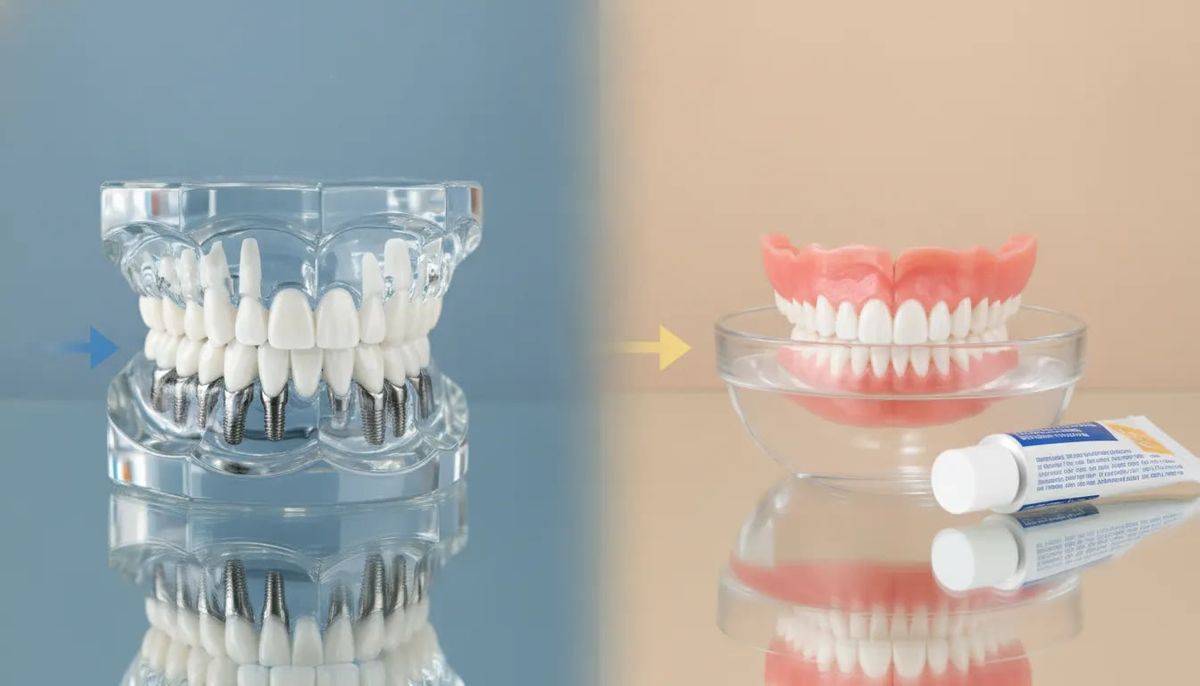
Replacing a full arch of missing teeth involves more than choosing a new smile. You’ll also want to understand how each option feels, what daily care looks like, and what treatment may involve. Comparing All-on-4 dental implants vs. traditional dentures can help you start that conversation. All-on-4 uses implants to support a fixed bridge, while traditional dentures rest on the gums and come out for cleaning. Neither option is right for everyone. Your oral health, jawbone, medical history, budget, and preferences all matter. At RB Family & Cosmetic Dentistry in Rancho Bernardo, a consultation can help you discuss restorative options and the questions to ask before making a decision.
Key Takeaways
Know how each option works: All-on-4 uses implants to hold fixed replacement teeth, while traditional dentures rest on the gums and are removed for cleaning.
Compare more than the upfront cost: Consider surgery, healing, daily care, stability, future adjustments, and possible repairs.
Get advice based on your needs: Ask your dentist to assess your oral health and goals, explain suitable options, and provide an estimate of treatment costs.
What Are All-on-4 Implants and Traditional Dentures?
All-on-4 implants and traditional dentures can both replace a full arch of missing teeth, but they work differently. All-on-4 uses four implants in the jaw to support a fixed bridge. Traditional dentures rest on the gums and are removed for cleaning. These differences can affect daily care, comfort, treatment time, and how securely replacement teeth stay in place.
The right option depends on your oral health and what matters most to you. Your dentist will consider factors such as gum health, jawbone volume, remaining teeth, general health, budget, and preferences. An exam and imaging can help clarify which options may suit your needs. At RB Family & Cosmetic Dentistry, patients can discuss restorative care and, when appropriate, treatment coordinated with an oral and maxillofacial surgeon.
Treatment plans and timelines vary. Some All-on-4 patients may receive temporary teeth soon after surgery, while others need more time before a bridge can be attached. Here’s what to know about how each option works and what the process may involve.
How Four Implants Support a Fixed Full-Arch Bridge
All-on-4 treatment uses four dental implants in the jaw to support a full arch of replacement teeth. In a common approach, two implants sit near the front of the jaw, while two toward the back are angled. The implants act as anchors for a bridge designed to stay in place rather than be removed each day. This overview of All-on-4 treatment explains how the implant positions support a fixed prosthesis.
Your dentist and surgeon plan implant placement around your anatomy and oral health. They’ll assess your jawbone, gums, and other factors before recommending treatment. Some patients may receive temporary teeth shortly after surgery, but the final bridge is generally fitted after the implants have had time to heal. Your care team can explain the expected timeline for your situation.
How Removable Dentures Replace Missing Teeth
Traditional full dentures replace all the teeth in an upper or lower arch. They’re custom-made to rest on the gums, with a shaped base designed to fit your mouth. You remove them for cleaning and usually take them out before sleeping. As your mouth changes over time, a dentist can adjust or reline the dentures to help maintain their fit.
Because conventional dentures don’t require implant surgery, they may be an option for people who prefer a removable solution or want to avoid surgery. Their initial cost may also be lower than implant treatment, though costs vary. Some people use adhesive for added retention, while others need adjustments to address movement or sore spots. Your dentist can explain how restorative dentistry options may fit your needs.
What to Expect During Evaluation, Treatment, Healing, and Fitting
Your dentist will review your medical and dental history, examine your mouth, and may take X-rays or other imaging. For All-on-4, this evaluation helps determine whether implants are appropriate and how they might be positioned. Bone volume, gum health, and general health can affect your treatment plan. The differences between All-on-4 and implant-supported dentures can also help explain why treatment steps and timelines vary.
Traditional dentures also require an assessment and careful fitting. Your dental team may take impressions or digital scans to create dentures shaped for your mouth. Follow-up visits can help address sore spots or improve the fit. Implant treatment includes surgery and a healing period, while traditional dentures don’t involve implant surgery. Before you decide, ask your dentist about appointments, recovery, expected costs, and alternatives.
How Temporary Teeth and Adjustment Periods Work
Some All-on-4 patients receive temporary teeth on the day of surgery or soon afterward, but timing depends on the treatment plan and individual circumstances. These teeth aren’t the final bridge. While the implants heal and bond with the jawbone, your dental team will monitor your progress. Once healing is adequate, they can fit the final restoration. This guide to the temporary-to-final process describes one common approach.
With either option, expect an adjustment period as you get used to speaking and eating with replacement teeth. Your care team can recommend foods and cleaning steps during recovery. Removable dentures may need adjustments as your gums settle or your mouth changes. Contact your dentist if discomfort persists, the dentures feel loose, or eating remains difficult.
How Do All-on-4 Implants and Dentures Compare?
All-on-4 implants and traditional dentures can both replace a full arch of missing teeth, but they differ in how they’re supported, how you care for them, and what treatment involves. All-on-4 uses implants placed in the jaw to secure a fixed set of replacement teeth. Traditional dentures rest on the gums and are taken out for cleaning.
Neither option is right for everyone. Your oral health, jawbone, medical history, budget, and preferences all matter. For example, you may prefer teeth that stay in place, or you may want to avoid implant surgery. Your dentist can examine your mouth, review your health, and discuss the benefits and tradeoffs of each approach. RB Family & Cosmetic Dentistry offers restorative dental services for patients exploring ways to replace or repair teeth.
Treatment details also vary from person to person. Some patients may receive temporary teeth during implant treatment, while others need additional healing or procedures before a final restoration is ready. Dentures also require careful fitting and may need adjustments as your mouth changes. The comparisons below can help you prepare questions for a consultation, but an exam and imaging are needed to determine which options may work for you.
Compare Fixed Teeth with Removable Dentures
All-on-4 uses four strategically placed implants in an arch to support a fixed full-arch prosthesis. A dentist secures the restoration to the implants, so you don’t remove it at home. You’ll still need to clean carefully around and beneath it, and your dental team will check the restoration during routine visits. This fixed design may feel more like having teeth that stay in place. All-on-4 treatment is one way to replace a full arch with implant-supported teeth.
Traditional dentures rest on the gums and can be removed for cleaning and sleeping. Their fit, the shape of your mouth, and sometimes adhesive help keep them in place. The key difference is straightforward: All-on-4 teeth are fixed, while conventional dentures are removable. Your dentist can explain which approach fits your oral health and preferences.
Compare Stability for Speaking, Biting, and Chewing
Since All-on-4 teeth attach to implants, they typically move less than conventional dentures during speaking and eating. That stability may make biting and chewing feel more secure. Some patients find it easier to eat a wider range of foods, but your comfort will depend on your healing, the fit of the restoration, and your individual situation. Follow your dentist’s instructions about eating during recovery.
Traditional dentures can shift, especially if the fit changes as the gums and jaw change over time. Adhesive may help them stay in place, but it does not make them fixed. Many people adapt to eating and speaking with dentures, though some need time to adjust their speech or choose softer foods. A comparison of dentures and implant-supported teeth offers more context on stability. Ask your dentist what to expect based on your mouth and treatment plan.
Compare Comfort, Appearance, and Adjustment
Comfort is personal, and both options can take time to get used to. All-on-4 involves surgery and a healing period, followed by an adjustment to having a fixed restoration. Some patients appreciate that their teeth stay in place, but the prosthesis may feel different from natural teeth. You’ll also need to learn how to clean beneath it and follow your dental team’s care instructions.
Dentures don’t require implant surgery, but they may feel bulky at first or cause sore spots as you adjust. Your dentist can make changes to improve the fit, and future relines may be needed. Both options can be designed to complement your smile. Tooth shape, shade, and how the restoration fits your face all affect the result. Discuss your goals with a cosmetic dentistry provider to understand what may be achievable for you.
Understand How Each Option Affects Jawbone Health
After tooth loss, the jawbone may gradually change in the areas that no longer receive stimulation from tooth roots. Traditional dentures sit on the gums and do not replace those roots, so they don’t directly stimulate the jawbone. Changes in the mouth can also affect how dentures fit over time.
Dental implants are placed in the jawbone and can help maintain bone around the implant sites. All-on-4 uses implants to support a fixed restoration, and some removable dentures can also attach to implants. Implant treatment does not prevent every form of bone change, and it may not be suitable for everyone. Your dentist can assess your bone and oral health, then explain whether implants are an option. Review the practice’s dental services and ask which treatments may fit your needs.
Compare Treatment Time, Durability, Repairs, and Replacement
The treatment timeline depends on your health and the steps your care requires. Some patients may receive temporary teeth soon after implant placement, but the final restoration usually follows a healing period. Other treatments, such as extractions or bone grafting, can add time. Traditional dentures may be fitted without implant surgery, although extractions and healing can affect when they’re ready. This overview of All-on-4 treatment timing explains how healing and fabrication can shape the schedule.
Both options need ongoing care and may need repairs or replacement. Dentures can require adjustments or relines as your mouth changes. All-on-4 restorations can wear or need maintenance, and the implants require regular professional monitoring. Ask your dentist about expected checkups, cleaning, and potential future costs for your treatment plan.
What Are the Benefits and Tradeoffs of Each Option?
All-on-4 implants and traditional dentures can both replace a full arch of missing teeth, but they differ in how they’re supported, cared for, and fitted. All-on-4 uses implants in the jaw to hold a fixed set of teeth in place. Traditional dentures rest on the gums and can be removed for cleaning. Each option has benefits, and neither is right for everyone.
As you compare them, think beyond the initial price. Consider whether you’re comfortable with surgery, how you want your teeth to feel during meals and conversation, and what kind of cleaning routine suits you. Your oral health, jawbone volume, medical history, and treatment goals all affect which options may be appropriate. A dental exam can help clarify those factors and provide an estimate based on your needs.
The sections below outline the practical tradeoffs to discuss with your dentist. Use them to prepare questions about treatment, healing, maintenance, and long-term costs.
Explore the Benefits of Fixed All-on-4 Teeth
All-on-4 uses four implants in the jaw to support a fixed, full-arch prosthesis. Since the teeth are attached to implants rather than resting on the gums, they generally stay more stable than conventional removable dentures while you speak and eat. You don’t take the prosthesis out at home, though you’ll need to clean carefully around it and attend professional maintenance visits.
Some patients may receive temporary teeth on the day of surgery, depending on their health and treatment plan. All-on-4 may also use fewer implants and involve fewer procedures than replacing each missing tooth with an individual implant. Angled placement of the back implants can reduce the need for bone grafting in some cases, but this depends on your anatomy. Learn more about the All-on-4 approach and its potential advantages.
Consider Surgery, Healing, and Implant Risks
All-on-4 is a surgical treatment. It typically involves an evaluation, implant placement, and a healing period while the implants bond with the jawbone. Your dentist or oral surgeon will explain what to expect after surgery, including when you can return to different foods and how to care for your mouth during healing.
As with any surgery, risks can include infection, discomfort, or an implant that does not heal as expected. Some patients need additional treatment, such as bone grafting, which can add time and cost. Treatment timelines vary, and a final prosthesis may not be ready immediately. An exam and imaging help your dental team assess bone volume, oral health, and possible treatment needs before you make a decision.
Explore the Benefits of Removable Dentures
Traditional dentures replace missing teeth with a removable appliance that rests on the gums. They don’t require implant surgery and typically have a lower upfront cost than implant-supported options. For people who prefer to avoid surgery or need a more affordable initial treatment, they may be worth discussing with a dentist.
Removable dentures come out for cleaning, so you can clean the appliance separately from your mouth. They can also be adjusted or replaced as your mouth changes. A comfortable fit is important for speaking and eating, and your dentist can check whether dentures suit your needs. If you’re considering other ways to replace missing teeth, explore the practice’s restorative dentistry services and ask which options may fit your situation.
Consider Movement, Adhesives, Relines, and Replacement
Because traditional dentures rest on the gums, they may shift during meals or conversation, especially if the fit changes over time. Lower dentures can be particularly challenging for some people to keep in place. Adhesive may help with retention, but it won’t fix a denture that has become loose or no longer fits well. If your denture moves or causes sore spots, ask your dentist to assess it.
Your gums and jaw can change over time, so a denture may need adjustments or a reline to improve its fit. Dentures also experience wear and may eventually need repair or replacement. These future costs are useful to consider alongside the initial price. If you want a removable option with added retention, ask your dentist whether implant-supported dentures could be suitable.
Clear Up Misconceptions About Stability, Cost, and Care
It isn’t as simple as saying implants are always better or dentures are always cheaper. All-on-4 is fixed and generally offers more stability, but it involves surgery and often costs more upfront than conventional dentures. It may cost less than some other full-arch implant plans because it uses fewer implants and may reduce the need for bone grafting. Your total depends on your treatment needs and the materials used.
Traditional dentures usually have a lower initial cost, though relines, repairs, and replacement can add expenses over time. Cleaning also differs: you remove dentures to clean them, while fixed teeth require cleaning around the prosthesis and implants. This comparison of implant-supported options offers useful context, but a dental evaluation is needed for an estimate tailored to you.
Match Your Choice to Your Lifestyle and Priorities
Start by considering your daily preferences. Would you rather have teeth that stay in place, or do you prefer an appliance you can remove for cleaning? Think about comfort, eating habits, your budget, and whether you’re prepared for surgery and follow-up visits. Your answers can help guide a conversation with your dentist, but your oral health and jawbone also influence which options may be appropriate.
Ask about healing time, possible additional procedures, cleaning routines, and what happens if treatment needs to change. At RB Family & Cosmetic Dentistry, the team provides personalized care in Rancho Bernardo, with an oral and maxillofacial surgeon on staff. A consultation can help you review your goals and understand the benefits and tradeoffs of each option.
How Do All-on-4 and Denture Costs Compare?
The cost of replacing a full arch depends on the treatment, the materials used, and your oral health. Traditional dentures usually cost less upfront because they don’t require implant surgery. All-on-4 includes implant placement and a fixed bridge, so its initial cost is typically higher than removable dentures. However, it may cost less than some other full-arch implant approaches because it uses fewer implants and may reduce the need for bone grafting in some cases, as explained in this All-on-4 comparison guide.
It helps to look beyond the initial estimate. Dentures may need relining, adjustments, or replacement over time. All-on-4 requires regular dental care, and the bridge may eventually need repair or replacement. The right comparison depends on the full cost of treatment and upkeep, as well as your priorities for comfort, stability, and daily care.
Ask for a written estimate that clearly lists what’s included. RB Family & Cosmetic Dentistry provides restorative dental services and can discuss tooth-replacement options based on your needs.
Understand Upfront Costs and What Estimates Include
Traditional dentures generally have a lower upfront cost than All-on-4 because they don’t involve implant surgery. Prices vary by location and treatment plan. For example, one Texas practice reports All-on-4 costs of about $20,000 to $30,000 per arch. That figure is a location-specific example, not a San Diego estimate, and it should not be treated as a direct comparison with denture pricing. The practice’s cost comparison compares All-on-4 with traditional full-arch implants.
Request an itemized estimate that lists exams, imaging, extractions, surgery, temporary teeth, the final restoration, and follow-up visits. Confirm whether the quoted amount is for one arch or both, and ask which services may cost extra. Comparing estimates that cover the same steps gives you a clearer picture of the difference.
Compare Long-Term Cleaning, Relining, Repair, and Replacement Costs
Traditional dentures are removed for daily cleaning. Over time, they may need adjustments or relining as your mouth changes, and they may eventually need replacement. A fixed All-on-4 bridge stays in place, so you’ll brush it like natural teeth and clean carefully beneath it. Your dental team can show you the right tools and routine for your restoration.
Implants and bridges also need regular checkups and maintenance. One source estimates that All-on-4 implants may last 20 years or longer with good care, while the bridge may need replacement after about 15 to 20 years. These are estimates, not guarantees, and individual results vary. When comparing long-term costs, ask about likely maintenance, repairs, and replacement for each option. This guide to care and lifespan can help you prepare questions for your dentist.
See How Oral Health and Treatment Needs Affect Cost
Your dentist will consider gum health, remaining teeth, jawbone quality, and overall health before recommending dentures or implants. Tooth extractions, treatment for gum disease, or other procedures may add to the cost. Some people need bone grafting before implant placement, while others may not.
All-on-4 may use fewer implants than some other full-arch implant approaches, and certain patients may need less bone grafting. That doesn’t mean it’s the right fit for everyone. Bone volume and density, oral health, and personal goals all affect candidacy and treatment planning. An exam and imaging help your dentist identify what care you need and provide a more accurate estimate. The factors that affect implant suitability are worth discussing during your consultation.
Ask About Insurance, Financing, and Payment Options
Dental insurance may cover some parts of treatment, such as exams or extractions, but coverage for dentures, implants, and related procedures varies by plan. Ask your insurer for a written estimate of benefits, then confirm with the dental office what your plan may pay. Don’t assume insurance will cover the full cost of implant treatment.
If you’re considering financing, ask whether payment plans or third-party options are available. Review the terms before signing, including interest, fees, and the payment schedule. You can also ask whether treatment can be planned in stages and how that may affect the total cost. A consultation with RB Family & Cosmetic Dentistry is a good time to discuss your treatment estimate and ask about payment options.
Are Snap-In Dentures a Middle-Ground Option?
Snap-in dentures combine implant support with a removable design. They may offer more stability than conventional dentures while remaining easier to remove for cleaning than fixed All-on-4 teeth. Whether they’re right for you depends on your oral health, goals, and preferences.
Learn How Implant-Supported Dentures Attach
Snap-in dentures, also called implant-retained dentures, connect to small attachments on dental implants placed in the jaw. Many treatment plans use two to four implants, though the number and placement depend on your needs. The denture snaps onto the attachments and can be removed for cleaning.
Unlike conventional dentures, which rest on the gums, snap-in dentures gain support from implants. Unlike a fixed implant bridge, they’re designed to be taken out by the wearer. Your dentist can explain how each option works and what your treatment might involve. RB Family & Cosmetic Dentistry provides dental implant and denture services and can discuss options based on your needs.
Compare Their Stability and Care with Conventional Dentures
Since snap-in dentures attach to implants, they may shift less than conventional dentures during eating or speaking. That added retention can help some people feel more secure, but comfort and function vary. An exam can help determine whether implant support may improve the fit of your current denture.
Both options need daily cleaning and regular dental follow-up. Snap-in dentures must be removed for cleaning, and their clips or O-rings can wear over time. Conventional dentures may need adjustments, relines, or replacement as your mouth changes. Ask your dental team what maintenance to expect for each option. RB Family & Cosmetic Dentistry offers restorative dentistry and can help you understand the care involved.
Compare Snap-In Dentures with Fixed All-on-4 Teeth
The main difference is that snap-in dentures are removable, while All-on-4 teeth are fixed in place. Snap-in dentures attach to implants but can be taken out by the wearer for cleaning. All-on-4 uses four strategically placed implants to support a full arch of replacement teeth. Your dental team will explain the treatment sequence and when the prosthesis can be attached.
Snap-in dentures may suit people who want implant support and a removable design. All-on-4 may appeal to those who prefer fixed teeth. Cost, maintenance, and treatment requirements differ. This comparison of snap-on dentures and All-on-4 can help you prepare questions, but an exam is needed to discuss your options.
Consider Candidacy, Attachment Maintenance, and Cost
Your dentist or oral surgeon will consider your gum health, jawbone, medical history, and goals when assessing whether implants may be suitable. An exam and imaging can help determine what treatment is needed. If you’re considering implants, ask how your health and any preparatory care could affect the treatment plan and timeline.
Snap-in dentures may cost less than a fixed implant option, but the total depends on the number of implants, materials, preparatory treatment, and follow-up care. Attachment components may also need periodic replacement. Ask for an estimate that includes both the initial treatment and likely maintenance. Comparing these details can help you weigh the costs and care needs of removable and fixed options.
Who May Be a Candidate for Each Option?
All-on-4 implants and traditional dentures can both replace a full arch of missing teeth, but they suit different needs. All-on-4 uses implants to hold a fixed bridge in place. Traditional dentures rest on the gums and can be removed for cleaning. Your dentist will consider how many teeth need replacement, the condition of your gums and jawbone, your general health, and whether you prefer fixed or removable teeth.
Your goals and daily routine matter, too. Consider how you want replacement teeth to feel, how much care you’re comfortable with, whether you’re open to surgery, and what fits your budget. Some people may be candidates for more than one option, while others may need treatment for gum disease or damaged teeth before moving forward. A consultation can help clarify which choices are appropriate.
If you’re considering tooth replacement, RB Family & Cosmetic Dentistry offers restorative dental services for damaged or missing teeth. The team can review your oral health and discuss treatment options, including care involving an oral and maxillofacial surgeon.
Consider Tooth Loss, Remaining Teeth, and Gum Health
All-on-4 is generally designed for people missing most or all of their teeth in one arch. It may also suit some denture wearers who want a fixed replacement. Traditional dentures may be considered when a full arch needs replacement and a removable option better fits a person’s preferences or health needs.
If you’re missing only one or a few teeth, replacing an entire arch may not be necessary. Individual implants or a dental bridge could be alternatives to discuss. Your dentist will also check the health of your remaining teeth and gums. Gum disease or teeth that need treatment may affect the timing of tooth replacement. A comparison of implant options notes that individual implants may be suitable for some people replacing fewer teeth, while All-on-4 is intended for full-arch restoration.
Assess Bone Volume and the Need for Additional Treatment
Implants need adequate jawbone for support. In All-on-4 treatment, four implants are placed in the jaw, with the back implants angled to make use of available bone. This approach may reduce the need for bone grafting for some people, but it doesn’t guarantee that grafting or other procedures won’t be needed. An exam and imaging help the dental team assess your bone and plan treatment.
People missing several teeth or with significant bone loss may need a more detailed evaluation. Depending on what the exam shows, options may include All-on-4, another implant approach, dentures, or additional treatment before implants. A guide to All-on-4 and implant-supported dentures explains how implant placement can make use of available bone. Your dentist can discuss what the findings mean for your individual treatment plan.
Review Health, Medications, and Healing Factors
Your general health can affect healing after implant surgery. Smoking, uncontrolled diabetes, and some medications that affect bone may influence treatment planning. These factors don’t automatically rule out implants, but your dentist and oral surgeon should know about them before recommending care.
Share a current list of medications and supplements, along with health conditions, past surgeries, and any history of healing complications. Your care team can decide whether additional monitoring or coordination with your medical provider may be appropriate. If implant surgery isn’t a suitable choice, removable dentures may be an alternative. Health and healing factors are an important part of an implant evaluation, so be open about your medical history and ask how it could affect your options.
Find Out When Removable Dentures May Fit Your Needs
Traditional dentures may be a good fit if you prefer a removable option, want to avoid implant surgery, or have health or bone factors that make implants less suitable. They may also appeal to people who want to keep initial costs lower. Because dentures rest on the gums, their fit can change over time. Your dentist may recommend adjustments or relines to help them fit comfortably.
Snap-in dentures are another removable choice. They attach to implants for added retention, but you can take them out for cleaning. This option still involves implant placement and ongoing care for the attachments. A dentist can help you compare conventional and snap-in dentures with fixed All-on-4 teeth, including differences in stability, care, and treatment needs. Learn more about how snap-on dentures compare with All-on-4.
Weigh Your Budget and Preference for Fixed or Removable Teeth
Think about how you want replacement teeth to fit into your daily routine. All-on-4 teeth stay fixed in place, while traditional dentures are removed for cleaning. Some people prefer the feel of fixed teeth; others want a removable option or would rather avoid surgery. Consider the cleaning routine, follow-up visits, and potential repairs that may come with each treatment.
The total cost depends on more than the replacement teeth. Implant treatment may include surgery, imaging, temporary teeth, or other procedures. Dentures may need adjustments, relines, or replacement over time. Ask for a written estimate that explains what is included and what might cost extra. Your budget, desired timeline, and personal goals all deserve a place in the conversation. Treatment recommendations can take these priorities into account, as described in this comparison of All-on-4 and traditional options.
Use an Exam and Imaging to Assess Candidacy
A consultation can help determine whether All-on-4, traditional dentures, or another treatment may work for you. Your dentist will review your teeth, gums, medical history, and goals. X-rays or a CT scan may be recommended to assess your jawbone and plan implant placement. These findings help the dental team explain which options are appropriate and whether you may need treatment before proceeding.
Candidacy depends on several factors, including the number of teeth to replace, the health of your remaining teeth, bone volume, healing considerations, budget, and preference for fixed or removable teeth. If implant surgery is an option, ask how your dentist and oral surgeon will coordinate your care. RB Family & Cosmetic Dentistry provides a range of dental services in Rancho Bernardo, with an oral and maxillofacial surgeon on the team.
How Can You Prepare for a Dental Consultation?
A little preparation can help you make the most of your consultation. Bring your questions, share what matters most to you, and ask how each option could fit your health, budget, and daily routine.
Share Your Dental History, Medications, and Health Conditions
Bring a list of your medications, supplements, allergies, and health conditions. Tell your dentist about past dental procedures, gum problems, previous dentures, and any concerns about healing or anesthesia. These details can affect whether implant treatment is appropriate and whether you may need care before moving forward.
Your dentist will assess your gums, remaining teeth, and overall oral health. X-rays or a CT scan may help evaluate your jawbone and plan treatment. Angled implants may be an option for some people with reduced bone, but an exam is needed to determine what is suitable for you. Sharing your full health history helps your care team make a recommendation based on your individual needs.
Describe Your Priorities for Comfort, Appearance, Eating, and Cleaning
Before your appointment, think about what you want your replacement teeth to help you do. Would you prefer teeth that stay in place, or do you value being able to remove them for cleaning? Are comfort, appearance, speaking, or eating certain foods especially important to you? Your answers can help your dentist compare options in a way that reflects your everyday life.
Consider the time and effort you can dedicate to daily care, too. A fixed All-on-4 bridge requires cleaning beneath the restoration, while conventional dentures are removed for cleaning. Both options have care needs, but they fit different routines. Be open about your preferences so your dentist can explain the tradeoffs clearly.
Ask About Risks, Alternatives, Timelines, and Recovery
Ask what each treatment involves, from the first appointment through healing and follow-up. For implants, discuss surgical risks, anesthesia, recovery, and what you can eat while healing. Find out whether you may need extractions, bone grafting, or other treatment first. For dentures, ask about fitting appointments, adjustments, and the time it may take to get used to them.
Ask which alternatives could suit you, including conventional or implant-supported dentures, and request an estimated timeline for each option. An exam and imaging can help your team assess your needs. You can also ask what might change the plan or extend treatment. This overview of implant and denture evaluations offers useful questions to bring to your appointment.
Compare Maintenance Plans and Long-Term Care
Ask how to clean each option, which tools you may need, and how often you should schedule checkups. A fixed All-on-4 bridge needs daily brushing and careful cleaning beneath it, where food and plaque can collect. Conventional dentures should be removed and cleaned daily. Your dentist can demonstrate the right techniques and recommend supplies for your restoration.
It’s also helpful to discuss adjustments, repairs, and replacement. Dentures may need relining as the shape of your mouth changes. Implant-supported restorations can also need professional maintenance or repair over time. Ask what care is included in your treatment plan and what future visits may cost. These implant-supported teeth care recommendations can help you prepare, but follow the instructions your dental team gives you.
Discuss Coordination Between Your Dentist and Oral Surgeon
All-on-4 treatment involves surgical planning as well as designing and fitting a restoration. Ask who will place the implants, who will oversee the bridge, and how the clinicians will coordinate your care. Clarify who to contact if you have questions during healing and how follow-up visits will be arranged.
At RB Family & Cosmetic Dentistry, patients can discuss treatment with a team that includes an oral and maxillofacial surgeon. Review the practice’s dental services and care team to learn more. Before you leave, ask for the recommended sequence of care, an estimate of costs, and a contact for follow-up questions.
Related Articles
All-on-4 vs. Traditional Implants: Which Is the Best Full Mouth Solution?
All-on-4 vs. Implant-Supported Dentures: An In-Depth Comparison
Frequently Asked Questions
Are All-on-4 implants better than traditional dentures? Neither option is best for everyone. All-on-4 provides fixed teeth supported by implants, while traditional dentures are removable and don’t require implant surgery. Your oral health, budget, comfort preferences, and willingness to have surgery all matter. A dental exam can help you compare options for your situation.
Can I get temporary teeth on the day of All-on-4 surgery? Some patients receive temporary teeth on the day of surgery or soon afterward, but this depends on their health and treatment plan. The final bridge is usually fitted after the implants have had time to heal. Your dentist or oral surgeon can give you a timeline based on your needs.
Do I need enough jawbone to get All-on-4 implants? Implants need jawbone for support, but the amount available doesn’t tell the whole story. Your dental team can use an exam and imaging to assess your bone and plan treatment. Some people may need additional procedures, while others may have alternatives such as dentures.
Are snap-in dentures the same as All-on-4? No. Snap-in dentures attach to implants but can be removed for cleaning. All-on-4 supports a fixed bridge that you don’t take out at home. Both involve implant placement, but they differ in how the teeth are secured and cared for.
How do I compare the long-term costs of dentures and All-on-4? Ask for an itemized estimate that includes treatment, follow-up care, and possible future repairs or adjustments. Dentures may need relines or replacement as your mouth changes, while implant-supported teeth also require professional maintenance. RB Family & Cosmetic Dentistry can discuss restorative options and costs based on your needs.